
The story behind Reloop: why we built an open-source alternative to SendGrid, Resend, and Mailgun, why email infrastructure is too critical to rent forever, and what we're changing.
Email is the most critical communication backbone of modern software, yet it has quietly become one of the most expensive and locked-down tools in SaaS.
When your auth tokens, receipts, password resets, and user notifications fail, your business is effectively down. Yet for over a decade, developers have been forced to accept a frustrating tradeoff: either pay skyrocketing bills to closed email vendors, or spend months wrestling with fragile mail servers that lack modern APIs, webhooks, and analytics.
We built Reloop because we believe email infrastructure belongs in the open. Here is the story behind why we started, the structural problems we kept running into, and why we made Reloop Apache 2.0.
The problem: Email became a hostage situation
Every growing startup and engineering team we spoke with was hitting the same predictable wall: monthly email bills exploding from $20 to $2,000+ as user volume scaled, without any corresponding increase in value or underlying infrastructure costs.
Beyond pricing, closed-source email providers introduce compounding technical risks:
- Vendor lock-in by design: Proprietary APIs, custom template formats, and vendor-specific webhook payloads ensure that leaving a provider requires a painful, multi-week engineering rewrite.
- Opaque black-box delivery: When emails silently fail or get flagged as spam, closed vendors offer vague deliverability scores rather than raw SMTP transcripts and transparent queue visibility.
- Zero data sovereignty: Every user interaction, email address, password reset token, and payload metadata passes through third-party servers—creating compliance headaches for HIPAA, GDPR, and enterprise audits.
- Single point of failure: If your closed email SaaS suffers an outage, your entire authentication and notification loop goes dark with zero fallback.
To see how these tradeoffs compare across the ecosystem, check our 2026 email provider comparison or explore side-by-side breakdowns against SendGrid, Resend, Mailgun, and AWS SES.
Why "just use Postfix" isn't the answer
The traditional counterargument from senior engineers has always been: "Why not just run your own Postfix, KumoMTA or Haraka instance?"
The harsh reality is that raw Postfix provides a mail transfer agent, not modern developer infrastructure.
Running bare SMTP solves packet transmission, but it leaves you with months of grueling undifferentiated engineering work:
- Reputation & protocol engineering: Configuring SPF, DKIM, and DMARC, handling IP warming sequences, and managing suppression lists.
- Bounce classification: Distinguishing between temporary soft bounces and permanent hard bounces automatically to protect domain reputation (see our guide on email bounce processing automation).
- Developer ergonomics: Building ergonomic REST APIs, multi-language SDKs, and template render engines.
- Visibility & observability: Parsing real-time delivery events into signed webhooks and actionable email analytics.
Building all of this in-house takes 6 to 9 months of full-time platform engineering before sending your first production receipt. Most teams cannot afford that distraction, so they reluctantly pay the SaaS.
What we built with Reloop
Reloop bridges this gap: a production-grade, fully open-source email engine with the developer experience of modern email SaaS, built to run anywhere.
1import { Reloop } from "reloop-email";2
3const reloop = new Reloop({ apiKey: "rl_123456789" });4
5const { response, emailError } = await reloop.mail.send({6  from: "Reloop <hello@send.example.com>",7  to: "user@example.com",8  subject: "Welcome to Reloop",9  html: "<p>Thanks for signing up.</p>",10  text: "Thanks for signing up.",11  reply_to: "support@example.com",12  tags: [{ name: "campaign", value: "welcome" }],13});14if (emailError) throw emailError;
Reloop gives you the complete lifecycle out of the box:
- Unified REST API & Drop-in SDKs: Ergonomic endpoints and official SDKs for Node.js, Python, and Go designed for seamless migration from existing providers (see our SendGrid migration guide).
- SMTP relay & Drop-in replacement: Instantly plug Reloop into Nodemailer, Next.js, Django, Laravel, Rails, or Supabase.
- Automated deliverability loop: Built-in SPF/DKIM validation, feedback loops, and intelligent retry queues powered by BullMQ (detailed in how we built our queue engine).
- Real-time email analytics: Full visibility into deliveries, opens, click tracking, bounces, and complaint rates with zero third-party tracking scripts.
- Signed webhook delivery: Guaranteed event delivery with automatic backoff, replay capabilities, and secret signing.
- AI Agent inboxes & MCP support: Two-way inbound parsing and Model Context Protocol tooling so autonomous agents can send, receive, and reason over email safely (explore our AI agent inbox use case and email infrastructure for AI agents).
The open-source bet: Boring infrastructure must be open
Think about the foundational software that powers modern computing: Linux, PostgreSQL, Redis, Kubernetes, and Nginx.
Nobody rents their primary database or operating system behind a closed, proprietary paywall where the underlying code cannot be inspected, self-hosted, or audited. Email sits squarely in that foundational tier.
By releasing Reloop under the Apache 2.0 license, we guarantee:
- Complete Stack Ownership: The cloud platform and the open-source release run the exact same codebase. You can
docker compose uplocally, host on Fly.io or Coolify, or run on bare metal for under $5/mo (see how to self-host email for $5/month). - Auditability & Security: Security teams can inspect every line of delivery logic and keep sensitive communication strictly within their own VPC boundary.
- No Ransom Pricing: If your business grows 100x, your outbound communication channel doesn't become your most expensive utility. You can choose managed Reloop Cloud pricing for zero ops, or self-host with complete independence.
For a deeper dive into our architectural philosophy, read our product beliefs and why open source matters.
Where we go from here
We are building Reloop in the open with a public roadmap driven by real developer feedback, not arbitrary pricing metrics.
Whether you are an indie hacker shipping your first app, a high-growth startup outgrowing vendor limits, or an enterprise demanding strict compliance: you should never have to compromise between world-class developer experience and complete infrastructure ownership.
Get involved
- Star and explore the repository: github.com/reloop-labs/reloop
- Start sending on Reloop Cloud: reloop.sh/dashboard/signup
- Browse the documentation: Reloop Docs · Self-Host Guide · Pricing · Provider Comparisons
Read more

Introducing Reloop: Open-Source Email Infrastructure Developers Actually Want to Use
Open-source email infrastructure for indie hackers, startups, product teams, and enterprises. Ship transactional mail, agent inboxes, and inbound on Reloop Cloud or self-host—same product, no lock-in.
The Hidden Costs of Disposable Emails (And How Blocking Them Saves You Thousands)
From CRM contact-tier inflation to free-trial credit farming and burned domain reputation—here is the real cost of disposable emails and how a free temp email checker saves thousands.
How to Block Disposable Emails at Signup (Free Temp Email Checker)
Stop throwaway signups before they bounce, burn free trials, and tank sender reputation. Use Reloop's free temp email checker — ~210k disposable domains, no SMTP probing.
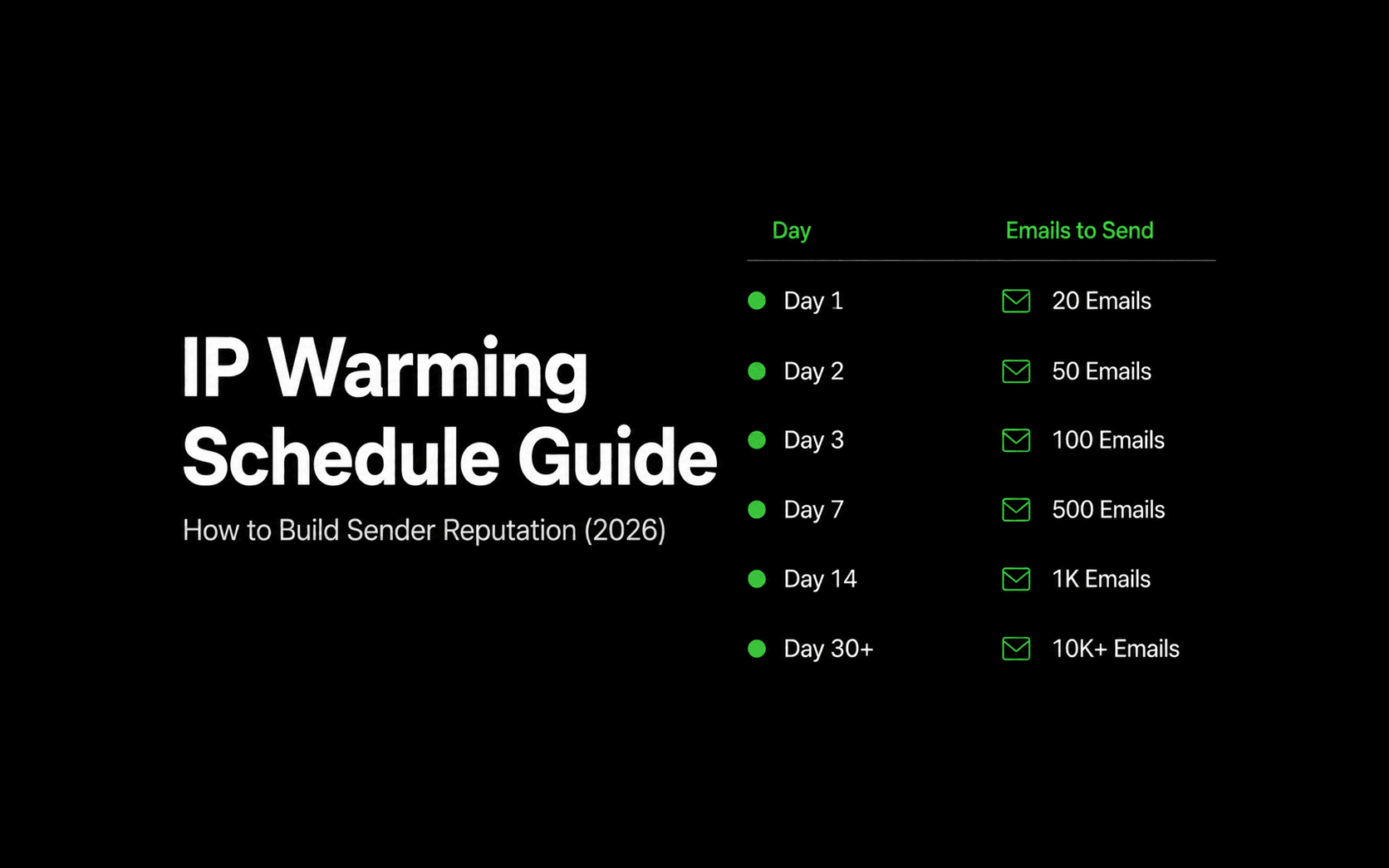
IP Warming Schedule Guide: How to Build Sender Reputation (2026)
A comprehensive, practical guide to warming new sending IP addresses — with an exact week-by-week volume ramp schedule, recipient segmentation strategy, throttle limits, and deliverability monitoring.
Ship your first email with Reloop in minutes
Open-source, deliverability-focused, and yours to self-host or run on Reloop Cloud. No lock-in, no rewrite later.