Introducing Reloop: Open-Source Email Infrastructure Developers Actually Want to Use
7 MINUTES READ

Open-source email infrastructure for indie hackers, startups, product teams, and enterprises. Ship transactional mail, agent inboxes, and inbound on Reloop Cloud or self-host—same product, no lock-in.
Here's the one thing every developer and every company cares about with email infrastructure:
Will the mail land, and will we still own the stack when it does?
Pretty dashboards, fancy editors, and feature checklists are secondary. Password resets, receipts, and agent replies only matter if they reach the inbox, stay affordable as you grow, and don't trap you in a vendor you can't leave.
Today we're introducing Reloop: open-source email infrastructure built around the five things people actually evaluate when they pick (or regret picking) an email provider. Prefer a side-by-side? Start with Compare Reloop or our 2026 provider comparison.
The five things that matter
1. Deliverability
If mail lands in spam, nothing else counts. Reloop is built as real delivery infrastructure: SMTP, DKIM/SPF-oriented setup, bounce classification, and the operational pieces that keep reputation from becoming someone else's mystery. Use Reloop Cloud when you want managed reputation and IP pools. Self-host when you want the sending path on your own terms—see self-hosted email infrastructure for when that tradeoff is worth it.
2. Developer experience
You should ship a transactional email in minutes, not a sprint. Reloop has a clean REST API (familiar if you've used modern email APIs), SDKs for every major language, and SMTP drop-in for Nodemailer, Laravel, Django, and the rest. Prefer the product tour for builders? See Developers.
1import { Reloop } from "reloop-email";2
3const reloop = new Reloop({ apiKey: "rl_123456789" });4
5const { response, emailError } = await reloop.mail.send({6  from: "Reloop <hello@send.example.com>",7  to: "user@example.com",8  subject: "Welcome to Reloop",9  html: "<p>Thanks for signing up.</p>",10  text: "Thanks for signing up.",11  reply_to: "support@example.com",12  tags: [{ name: "campaign", value: "welcome" }],13});14if (emailError) throw emailError;
Local and production should feel like the same product. Docs should help you ship, not send you hunting.
3. Cost that doesn't punish growth
Email SaaS pricing often feels cheap at low volume and painful once you scale. Don't take that on faith—check the numbers yourself:
- Reloop pricing for hosted plans and what you get at each tier
- Compare Reloop vs Resend, vs SendGrid, vs Mailgun, and vs AWS SES
- Full grid: all provider comparisons
- Deeper write-up: email provider comparison 2026
Reloop gives you two answers: a hosted path when you want zero ops, and a full open-source path when you want to run the stack yourself and stop renting your outbound channel forever—including a low-cost self-host path if you're optimizing ops spend.
4. Ownership (no vendor lock-in)
This is the quiet deal-breaker. Proprietary APIs, opaque logs, and "you can't leave without a rewrite" are how email becomes a hostage situation. Reloop is Apache 2.0. The cloud product runs the same codebase you can docker compose up on Fly, Coolify, Kubernetes, or your own machines—see Fly.io and Coolify guides, or the self-host docs. Audit it. Fork it. Move it. Your data and compliance boundary stay yours. More on the bet: why we open-sourced email infrastructure and why open source.
5. Visibility and the full loop
"Did it send?" is not enough. You need deliveries, opens, clicks, bounces, and complaints as signed webhooks your app can act on: retries, suppressions, support alerts—plus email analytics when you need the operational view. And for modern products (especially AI agents), send-only is half a system. Reloop includes inbound parsing, agent inboxes, and MCP support so agents can send, receive, and inspect mail with structured tools instead of scraping a random mailbox. See email infrastructure for AI agents and the AI agent inbox use case.
Why we open-sourced it
Linux, Postgres, Redis, Nginx: the boring foundations of the internet are open. Email sits in that category. If it fails, users can't log in, can't reset passwords, and can't get receipts.
Open source is how we make the five things above credible. You can read how delivery works. You can leave without rewriting your notification stack. The roadmap gets shaped by people shipping real mail, not only by a pricing page. Full rationale: why we open-sourced email infrastructure and our product beliefs.
We're not open-sourcing a demo. Reloop Cloud and Reloop open source are the same product—same APIs whether you use hosted or self-host.
Who should care
Indie hackers, startups, side projects, product teams, and enterprises—if you're looking for your thing in email, Reloop is built for you.
Maybe that's cheap transactional mail that doesn't become your most expensive utility (pricing). Maybe it's multi-tenant delivery without standing up an MTA team. Maybe it's self-host or cloud with real ownership and no lock-in. Maybe you're migrating off SendGrid, Resend, or Mailgun and want parity without a science project (SendGrid migration guide). Or you're building AI agents that need inbound and outbound as real infrastructure.
Whatever your scale or stack, if deliverability, DX, cost, ownership, and visibility are how you judge email tools, keep Reloop on your radar—and verify the claims on compare, pricing, and the docs.
Get in
- GitHub: github.com/reloop-labs/reloop (star it, watch it, contribute)
- Cloud: reloop.sh/dashboard/signup (first email in a couple of minutes)
- Docs: Docs · Pricing · Compare · Self-host
We're early, shipping in public, and still at the stage where your feedback bends the curve. If those five things are what you care about, this is the project to watch.
Read more

Why We Open-Sourced Our Email Infrastructure
The story behind Reloop: why we built an open-source alternative to SendGrid, Resend, and Mailgun, why email infrastructure is too critical to rent forever, and what we're changing.
The Hidden Costs of Disposable Emails (And How Blocking Them Saves You Thousands)
From CRM contact-tier inflation to free-trial credit farming and burned domain reputation—here is the real cost of disposable emails and how a free temp email checker saves thousands.
How to Block Disposable Emails at Signup (Free Temp Email Checker)
Stop throwaway signups before they bounce, burn free trials, and tank sender reputation. Use Reloop's free temp email checker — ~210k disposable domains, no SMTP probing.
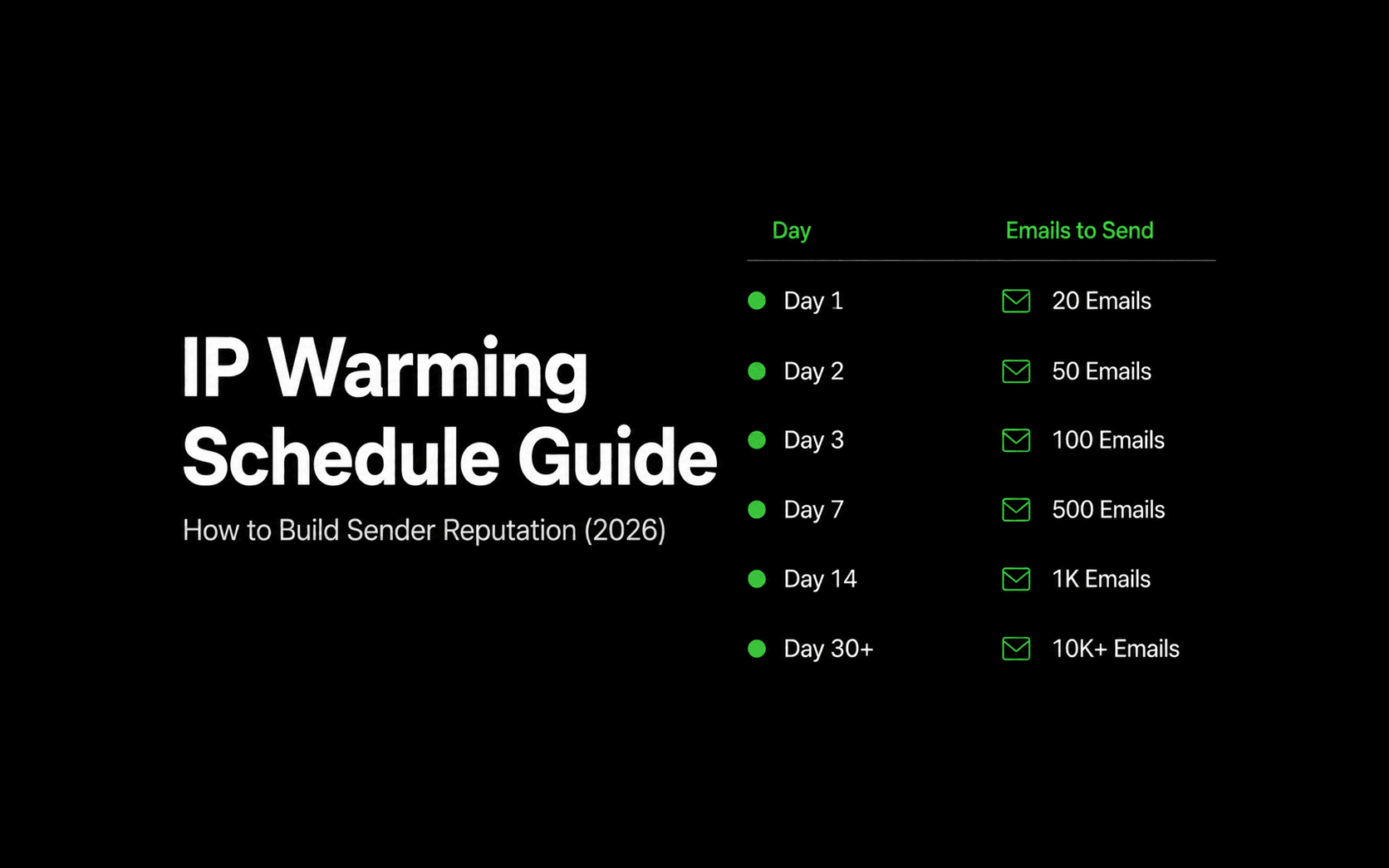
IP Warming Schedule Guide: How to Build Sender Reputation (2026)
A comprehensive, practical guide to warming new sending IP addresses — with an exact week-by-week volume ramp schedule, recipient segmentation strategy, throttle limits, and deliverability monitoring.
Ship your first email with Reloop in minutes
Open-source, deliverability-focused, and yours to self-host or run on Reloop Cloud. No lock-in, no rewrite later.